



Artificial intelligence is changing how database work gets done. What used to take hours of manual writing, testing, and troubleshooting can now be drafted in minutes with the help of large language models, coding assistants, and AI-enhanced development tools. For SQL Server teams, this shift is both exciting and risky.
AI can accelerate query writing, speed up stored procedure development, assist with indexing ideas, and even help troubleshoot performance problems. But speed without governance can create serious trouble. In production database environments, a single bad query can do far more than slow a report down. It can lock tables, overload resources, expose sensitive data, distort business logic, and create technical debt that is difficult to unwind.
At Falcon Source, we see AI as a powerful tool, but not a substitute for sound database administration, strong architectural discipline, or experienced SQL Server oversight. The real opportunity is not simply using AI to generate SQL faster. The opportunity is building the right governance model so AI becomes a productive assistant instead of an uncontrolled risk.
For organizations across Dallas, Fort Worth, and the broader North Texas business community, the question is no longer whether AI will influence database operations. It already has. The more important question is this: how do you put the right guardrails in place so AI-generated SQL improves productivity without compromising performance, security, or data integrity?
Why AI-Generated SQL Needs Governance
AI-generated SQL often looks impressive at first glance. It may be syntactically valid. It may return the expected result set in a test scenario. It may even appear elegant to a developer moving quickly under deadline pressure. But enterprise SQL Server environments are not judged by whether code merely runs. They are judged by how code behaves under real workloads, against large data volumes, across complex schemas, and within strict security and compliance expectations.
That is where governance matters.
AI models do not truly understand your environment. They do not inherently know your indexing strategy, your locking patterns, your concurrency requirements, your audit standards, or the business rules embedded across your schema. They generate what is statistically plausible, not what is operationally safe for your organization.
Without a governance framework, teams may unknowingly introduce unstable SQL into development and deployment pipelines. Over time, that creates hidden performance debt, inconsistent coding patterns, and a growing gap between what the database should do and what it is actually doing in production.
The Biggest Risks of Unmanaged AI in SQL Server
Before putting controls in place, it helps to understand where AI-generated SQL tends to break down.
1. Performance Problems Disguised as Productivity
One of the most common issues with AI-generated SQL is that it works functionally but performs poorly at scale. A query that returns the right answer against a small sample dataset may become a serious bottleneck against millions of rows.
This often shows up in familiar ways:
- Overuse of
SELECT * - Poor join strategies
- Non-SARGable predicates
- Missing or inefficient filtering
- Functions applied directly to indexed columns
- Correlated subqueries where better alternatives exist
- Sort-heavy or scan-heavy execution plans
AI frequently generates brute-force solutions because they are statistically common and broadly applicable. But broad applicability is not the same as enterprise readiness. In a production SQL Server environment, these patterns can lead to excessive I/O, CPU spikes, memory pressure, blocking, and degraded response times across dependent applications.
2. Security Vulnerabilities
Another major concern is security. AI tools can generate dynamic SQL patterns that are functional but unsafe. If prompts are not carefully structured, the model may suggest approaches that increase exposure to SQL injection, excessive privileges, or loose handling of user input.
Security risks often arise when AI-generated code includes:
- Unsafe dynamic SQL construction
- Poor parameter handling
- Overly broad permissions assumptions
- Inadequate filtering of user-provided values
- Direct access patterns that bypass security layers
In regulated industries such as healthcare, financial services, and legal services, these mistakes are not minor. They can create compliance failures, audit problems, and significant operational exposure.
3. Business Logic Hallucinations
AI can also produce SQL that appears reasonable but is logically wrong. This is especially dangerous because the query may execute successfully and return believable results.
Examples include:
- Joining on similarly named but incorrect columns
- Misinterpreting status codes
- Aggregating at the wrong grain
- Ignoring soft-delete logic
- Omitting required filters for business units, date ranges, or security context
- Recommending query patterns that conflict with triggers, constraints, or data retention logic
This is one of the most dangerous forms of AI failure in database work. When logic errors go undetected, decision-makers may act on inaccurate reports, dashboards, and downstream analytics.
4. Schema Blindness
Every SQL Server environment has its own design history, strengths, exceptions, and constraints. AI does not naturally know your environment’s realities unless you provide them clearly, and even then, its interpretation can still be incomplete.
It may not understand:
- Your primary and foreign key conventions
- Indexed view dependencies
- Partitioning strategy
- Resource-intensive reporting windows
- Custom ETL patterns
- Legacy application behavior
- Audit triggers and compliance controls
- Naming standards or data governance rules
This lack of context can lead to code that clashes with the actual design of your systems.
Building Technical Guardrails for AI-Generated SQL
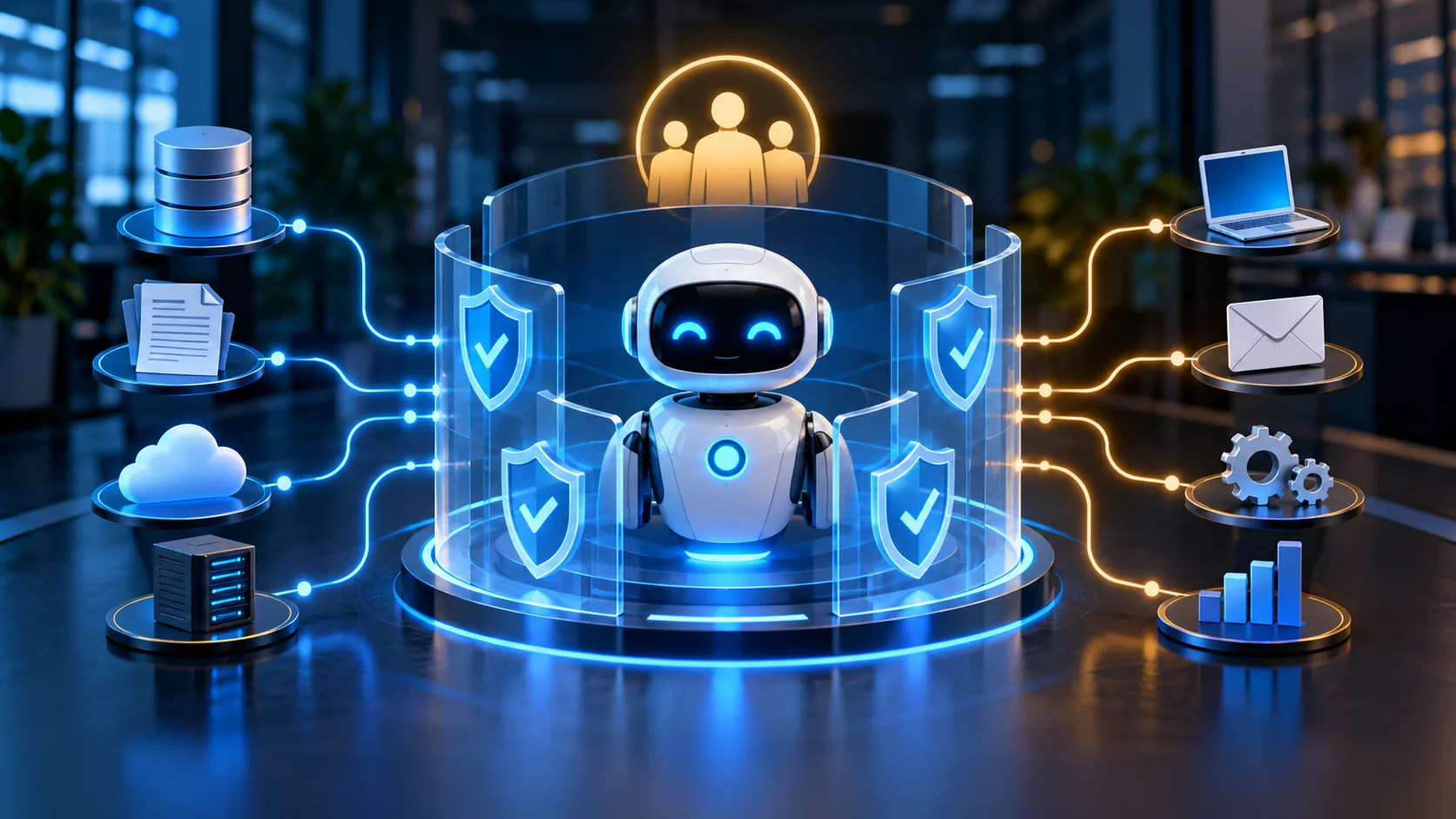
The right response is not banning AI outright. The right response is creating a controlled operating model. AI should function inside a governed workflow with enforced standards, testing steps, and review checkpoints.
1. Keep AI Development Out of Production
The first rule is simple: AI-assisted development should never happen directly against a production SQL Server instance.
Production is not the place to test ideas, experiment with generated code, or validate uncertain logic. Even read-only queries can become disruptive if they trigger large scans, tempdb pressure, or lock contention.
A better approach is to create dedicated AI-development or AI-validation environments where generated SQL can be tested safely. These environments should mirror production closely enough to support useful validation, but with restricted permissions and resource controls.
This allows teams to experiment without putting business-critical systems at risk.
2. Use Permission-Based Sandboxing
Developers working with AI-generated SQL should operate in tightly controlled environments. Not every user needs broad permissions, and certainly not when experimenting with code drafted by a model.
Practical controls include:
- Restricting schema modification rights
- Limiting access to sensitive data
- Enforcing read-only access where appropriate
- Separating AI testing workloads from core development activity
- Preventing direct execution against production-linked objects
When possible, use SQL Server security roles and least-privilege design to ensure that generated code can only touch what the user is authorized to access.
3. Control Resource Consumption
One poorly written AI-generated query can consume significant CPU, memory, and I/O. In high-demand environments, that can affect far more than the individual user who ran it.
This is where SQL Server tools such as Resource Governor can help. By capping or classifying workloads associated with development or AI testing sessions, organizations can prevent runaway queries from overwhelming shared infrastructure.
This is especially useful when multiple developers are experimenting with AI-assisted SQL generation at the same time.
4. Add a Performance Gate to the Workflow
AI-generated SQL should not move forward simply because it executes. It should pass a formal performance validation process.
A solid performance gate may include:
- Reviewing actual execution plans
- Comparing runtime against known baselines
- Checking logical reads and CPU costs
- Validating index usage
- Watching for scans, spills, and excessive memory grants
- Ensuring predicates are SARGable
- Confirming acceptable behavior under representative data volumes
SQL Server Query Store can play an important role here. It allows teams to compare plan history, identify regressions, and spot generated SQL that performs poorly compared with established patterns.
This turns performance validation from a subjective review into a measurable control.
Data Privacy, PII, and AI Prompt Governance
For many organizations, especially those handling customer, employee, patient, or financial data, AI governance must go beyond query performance. It must include strict rules for what data can and cannot be shared with an AI system.
This is critical.
When developers paste schemas, code, or sample data into public AI tools, they may accidentally expose sensitive information. Even if no malicious event occurs, the act itself may violate internal policy, contractual obligations, or compliance expectations.
That means database governance must now include prompt governance.
Best Practices for Protecting Sensitive Data
A strong AI governance framework should include rules such as:
- Never paste raw production data into public AI tools
- Do not include customer names, account numbers, health data, or financial records in prompts
- Use only masked or obfuscated schema examples
- Remove values and provide structure only when asking for help
- Prefer private or enterprise AI environments with stronger data handling commitments
- Maintain approved prompt templates for database-related AI usage
For organizations using Microsoft technologies, private enterprise options such as controlled Azure-based deployments are often a better fit than public consumer AI workflows. This gives businesses more control over privacy, access, and acceptable use boundaries.
Create a Formal De-Identification Standard
At Falcon Source, we recommend that organizations document a clear de-identification policy for AI-assisted SQL work. That policy should define exactly what developers are allowed to share with an AI assistant.
For example, a safe prompt may include:
- Table names
- Column names
- Data types
- General relationship descriptions
- Sample logic requirements without live values
A risky prompt would include:
- Actual customer records
- Protected health information
- Social Security numbers
- Payroll details
- Financial account data
- Credentials or connection strings
This distinction needs to be formalized, trained, and enforced.
The Human-in-the-Loop Requirement
AI can assist. It should not approve itself.
The most effective guardrail of all is experienced human review. Every AI-generated SQL artifact that matters should be reviewed by a qualified SQL Server professional before it is deployed or accepted into a production-bound codebase.
This is where many organizations fail. They assume that because code looks polished, it must be trustworthy. But in database work, polished code can still be wrong, slow, unsafe, or operationally disruptive.
A senior review should examine at least four areas:
Logic Review
Does the query actually reflect the intended business rule? Are joins correct? Are filters complete? Is aggregation happening at the right level?
Performance Review
Will this code scale? Does it align with indexing strategy? Does the execution plan show efficient access paths?
Concurrency Review
Will this query behave safely in a live environment with multiple users and competing transactions? Are isolation levels appropriate? Is the code avoiding harmful shortcut patterns?
Standards Review
Does the generated SQL align with internal naming, error handling, security, and modernization standards?
This is where human expertise remains irreplaceable. AI may produce a draft. A skilled SQL Server consultant determines whether that draft belongs anywhere near production.
Common AI SQL Mistakes That Need Professional Review
In real environments, we often see recurring patterns in AI-generated SQL that need correction.
One example is the overuse of NOLOCK. AI frequently suggests it as a shortcut to reduce blocking, but this can introduce dirty reads and inaccurate reporting. A professional review determines whether a different isolation strategy is more appropriate.
Another issue is misuse of dynamic SQL. AI may generate it because it is flexible, but it often needs safer parameterization and stronger review.
We also see generated code using outdated syntax, inefficient pagination patterns, or query structures that ignore well-established SQL Server optimization principles. In newer environments, that may mean missing opportunities to align with modern SQL Server 2022 and emerging SQL Server 2025 strategies.
AI Governance Should Extend Beyond Developers
Database governance for AI is not only a developer issue. It should involve database administrators, data architects, security teams, compliance leaders, and technical leadership.
A mature AI SQL governance framework should answer questions like:
- Who is allowed to use AI tools for database-related work?
- Which tools are approved?
- What environments can they be used in?
- What data can be included in prompts?
- What review steps are mandatory?
- How is generated code documented?
- How are exceptions handled?
- What is the escalation path if unsafe code is discovered?
When these questions go unanswered, organizations drift into informal usage patterns that are difficult to control later.
A Practical Governance Framework for AI-Generated SQL
For many companies, the best starting point is not a massive governance initiative. It is a practical framework that can be implemented quickly and strengthened over time.
A strong starting model includes:
- Approved AI usage policy for SQL development
- Dedicated non-production AI testing environment
- Least-privilege permissions for all AI-assisted work
- Prompt governance rules for privacy and data protection
- Performance validation using execution plans and Query Store
- Mandatory senior review for deployment-bound SQL
- Documentation of AI-generated code origin and review results
- Periodic audits of AI-assisted development practices
This approach gives organizations structure without slowing innovation to a crawl.
Why This Matters for Businesses
Companies across Dallas, Plano, Frisco, Irving, and the wider North Texas market are under constant pressure to move faster. Teams are being asked to deliver more reporting, better integrations, faster analytics, and stronger operational support with leaner headcount.
That pressure makes AI attractive. It promises speed, scale, and productivity.
But in database environments, the cost of moving fast without governance is high. A bad application release can be rolled back. A poor database change can create lasting damage, from performance regression and reporting failures to data quality issues and compliance exposure.
That is why local expertise still matters.
At Falcon Source, we help businesses use modern tools without losing control of core systems. We understand the realities of SQL Server performance tuning, query optimization, data governance, reporting, modernization, and operational stability. We work with organizations that want the benefits of AI-assisted development but need those benefits delivered inside a disciplined, enterprise-ready framework.
AI Is Here. Governance Must Catch Up.
AI-generated SQL is not a passing trend. It is becoming part of the modern development workflow. The organizations that succeed will not be the ones that simply adopt AI the fastest. They will be the ones that adopt it responsibly.
That means building guardrails now.
It means treating AI-generated SQL as draft material, not production truth. It means testing more rigorously, reviewing more carefully, and protecting data more intentionally. It means creating clear policies for tool usage, prompt hygiene, security, and performance validation.
Most importantly, it means recognizing that strong database governance is not becoming less important in the AI era. It is becoming more important than ever.
Work With Falcon Source
If your organization is exploring AI-assisted SQL development, now is the time to establish the right governance model before hidden risk starts accumulating in your environment.
Falcon Source helps businesses across Dallas and beyond strengthen SQL Server environments through performance tuning, database governance, security-minded architecture, reporting support, and modernization strategy. Whether you need help reviewing AI-generated SQL, creating safer development workflows, or stabilizing an already strained SQL Server environment, we can help.
Ready to put guardrails around AI-generated SQL?
Contact Falcon Source LLC at 972-515-2266 or visit falconsource.com to schedule a SQL Server health check or governance review.
Falcon Source LLC
Enterprise-grade SQL Server consulting, database governance, and data management solutions for Dallas businesses and remote clients nationwide.